

This is not a Daedalus!
An egregious example within a canon double standard.

Many starships in Star Trek receive their names only in extracanonical materials, making it easy to dismiss the titular accusation made against the name of Daedalus. I recognise that it is sensible to default to a beta canon name where one otherwise does not exist - how else should one refer to such ships as the Wolf 359 kitbashes?1 The names Cheyenne, Springfield, and Challenger, among many others, are never mentioned on screen, but fans still need some way to refer to these classes.
Accordingly, when Deep Space Nine has Commander Sisko display an unspecified model starship in his office, it is natural to adopt its name, as it is given in the book Star Trek Chronology, Daedalus.2
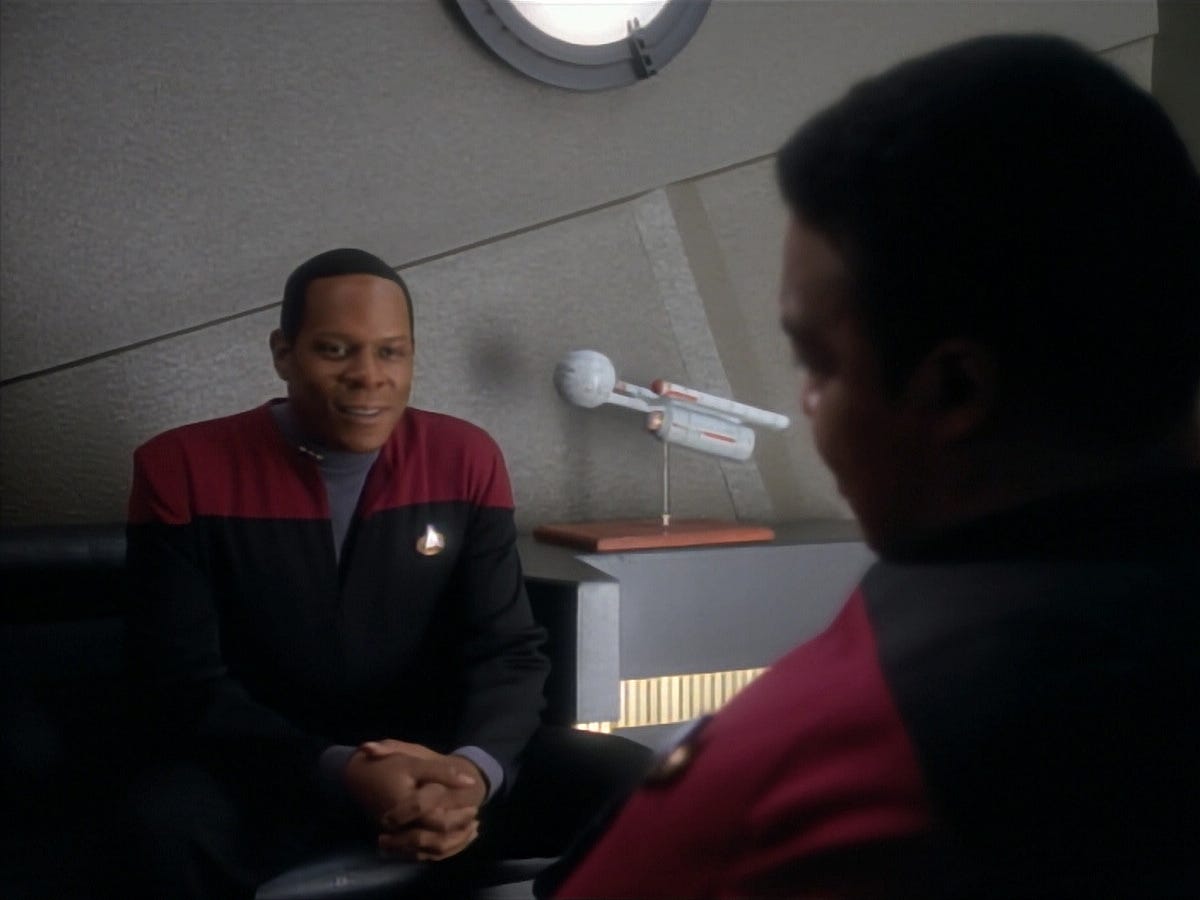
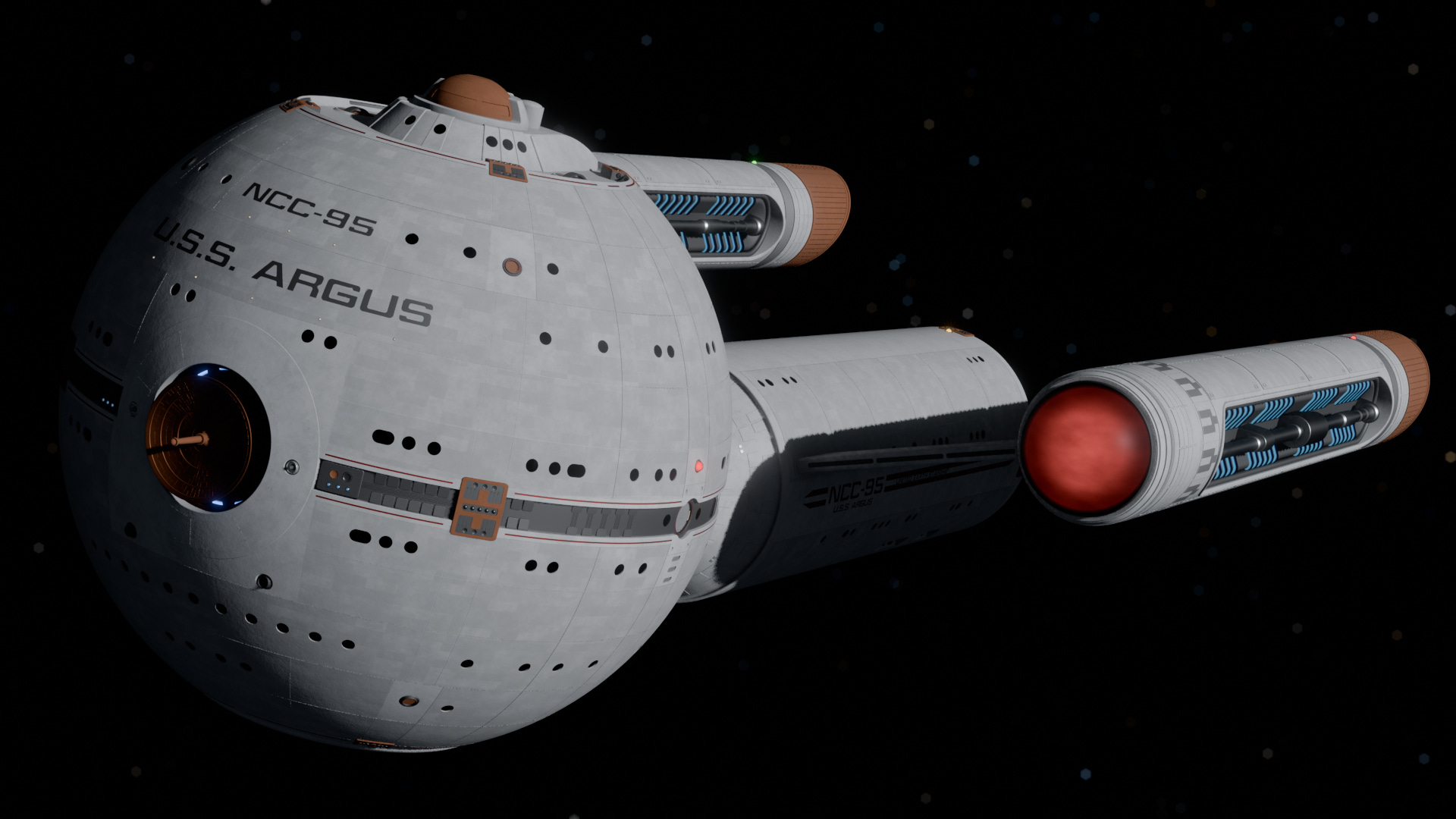
However, applying the name Daedalus in this case may prove incorrect. The ship shares design features with the Constitution-class U.S.S. Enterprise in TOS: The Cage; pay particular attention to the spiked, red warp nacelle caps. With the designs sharing technology, they can be dated to the same era, circa 2254. Thus far, dating the design seems irrelevant. However, unlike the names of other background ships, Daedalus was mentioned once on screen…


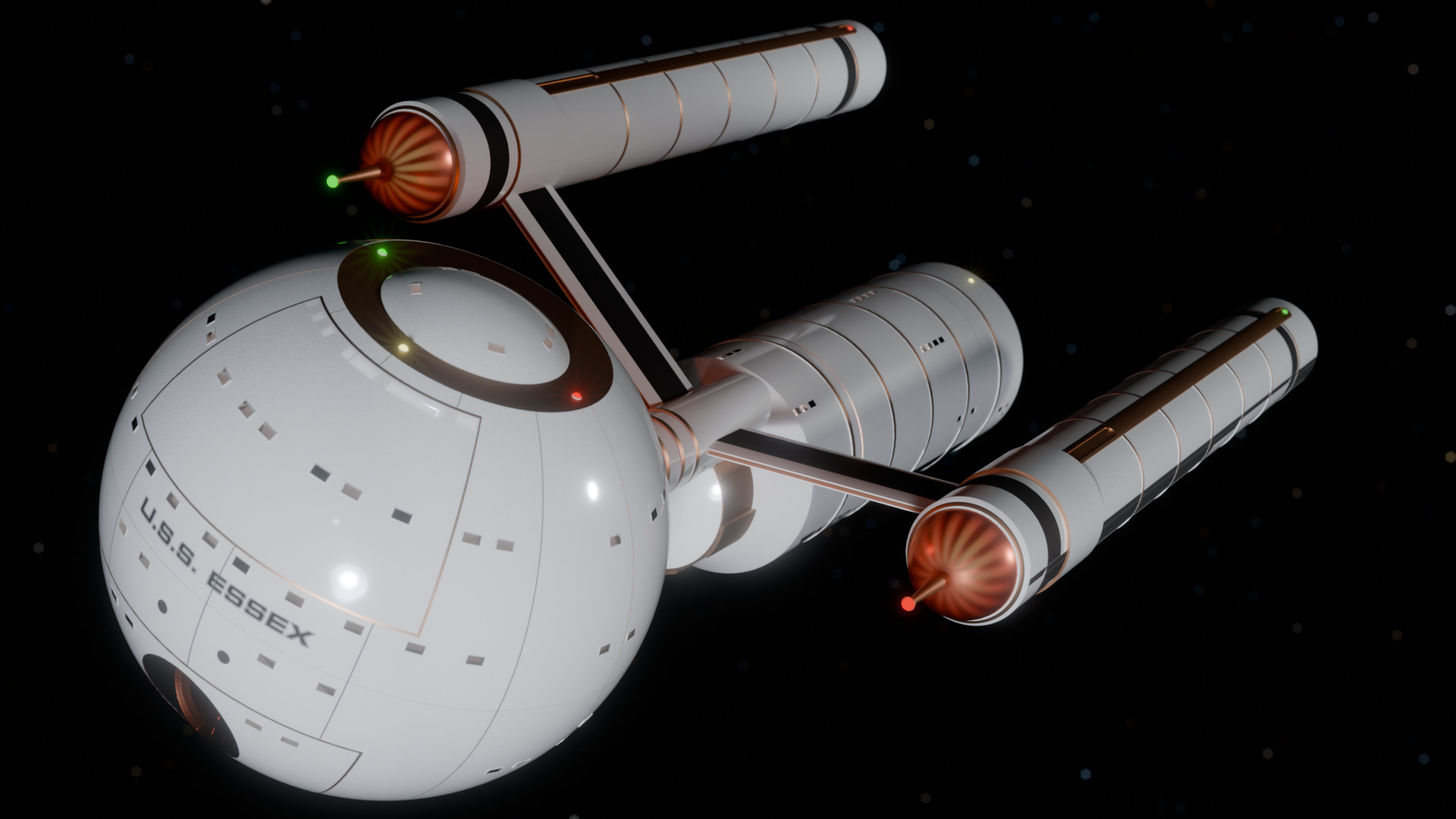
In the fourth season The Next Generation episode Power Play, we are reliably informed by Commander Data that there has not been a Daedalus class ship in service for 172 years.3 With TNG occurring in the 2360s, this Daedalus must have been decommissioned circa 2190, sixty years prior to The Cage. Further, Captain Picard claims that the U.S.S. Essex in particular, disappeared ‘over 200 years ago’, indicating that the Daedalus design may come from before the 2160s.4 Consequently, the model ship in Sisko’s office can not be called Daedalus, because it portrays a design of the 2250s, not that of a century earlier.
Of course, there are other potential explanations here; perhaps starship design really was stagnant for a century. Alternatively, Sisko’s model might portray a conceptual Daedalus refit, an unrealised extension to the vessel’s lifetime, still popular with starship enthusiasts as the BAC TSR-2 likewise remains popular among aeroplane enthusiasts today.
If indeed the U.S.S. Essex from Power Play is not the same type of ship depicted in Sisko’s office, what was it? Does the true Daedalus class of Power Play even feature a distinctive spherical section, or would it look very different to any design seen before?
Appendices
1. Why a sphere?
While I am writing about the Daedalus, I will briefly take the opportunity to discuss the place of spherical hulls in Star Trek, a question presented also in the alternate timeline of TNG: All Good Things and the Olympic class design.
The sphere is a natural pressure vessel, but the benefits that come from that are not obvious within space’s vacuum. The sphere maximises volume for a given surface area, so more components may be fit within the ship for a lower material cost of hull. However, this low surface area becomes a weakness in space, where spacecraft may only expel excess heat by radiation. The amount of radiation that a spacecraft may emit is described by Planck’s law and is proportional to surface area. Star Trek’s popular saucers then become a good compromise between the structural strength of a sphere, and the cooling efficiency of a flat plane.
But why might an older design sport a sphere? It seems to me that there are two cases to be made here.
The older designs are simpler and not so power-intensive, therefore having less heat to be irradiated and so do not need to maximise surface area with a saucer.
Older designs should not feature spheres, because that would imply special technology that enables them to otherwise efficiently counter heat.
The first is particularly unconvincing because the International Space Station (ISS) has nothing on board that comes close to the power demands of science-fiction (where fusion reactors are commonplace), yet the ISS is virtually flat. It needs to be because of its exposure to the sun. Regardless of what equipment a spherical starship might have aboard, they are presumably not going to be confined to the outer solar system and would need to be designed to remain cool in face of the sun.
Credits & Citations
Cover image rendered in Blender using a 3D model created by Citrullux.
‘Kitbashes’ being the term to describe the studio models hastily constructed from commercially available kits. For more information about the Wolf 359 kitbashes, see website Ex Astris Scientia, which has become the authority on the subject.
Okuda M, Okuda D. Star Trek Chronology the History of the Future. New York Simon And Schuster; 1996. ISBN 0671796119
TNG 5x15: Power Play
DATA: I will verify it. Just as I thought. It is a Starfleet subspace distress signal, standard to Daedalus-class starships.
RIKER: There hasn’t been a Daedalus class in service for what?
DATA: One hundred seventy two years, sir.
TNG 5x15: Power Play
PICARD: The Starship Essex vanished over two hundred years ago.
"The older designs are simpler and not so power-intensive, therefore having less heat to be irradiated and so do not need to maximise surface area with a saucer."
I would've thought that they had heat to electricity direct conversion technology by then.